

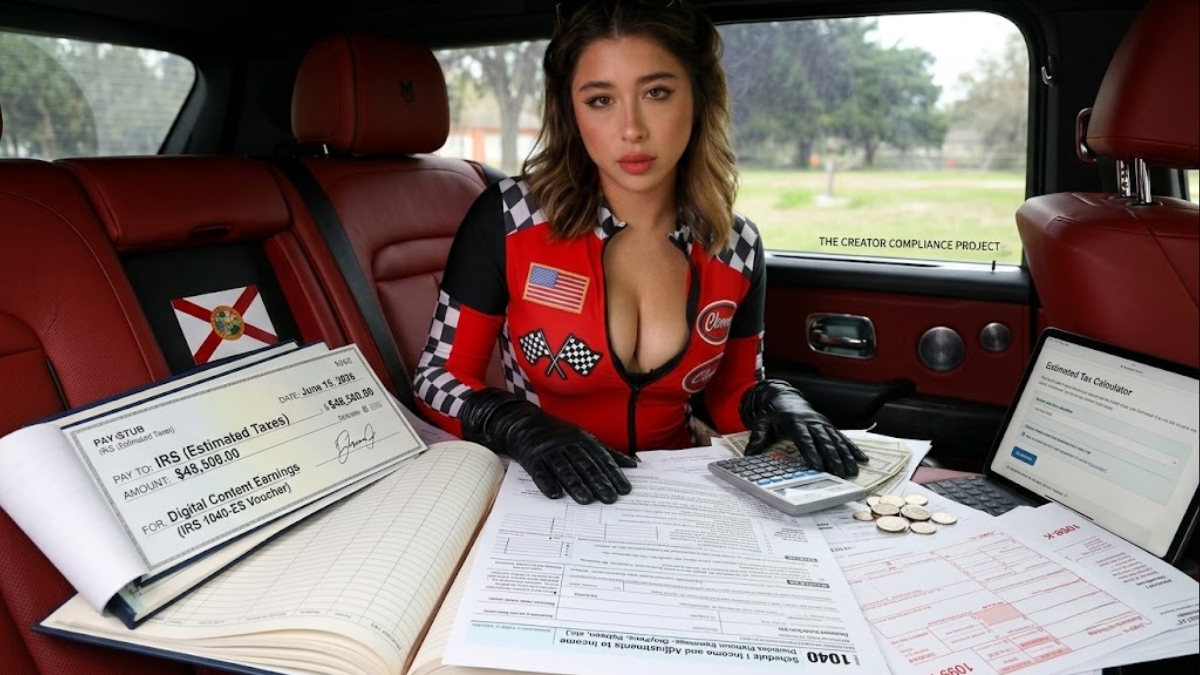
A federal grand jury has indicted Florida-based OnlyFans creator Kylie Leia Perez — better known online as “Natalie Monroe” — on five tax-related charges after she allegedly earned $5.4 million on the platform and failed to pay $1.6 million in federal income taxes. The case, prosecuted by U.S. Attorney Gregory W. Kehoe in the Middle District of Florida, represents the most high-profile federal tax enforcement action specifically targeting an OnlyFans creator’s platform earnings. And for the estimated 3+ million creators on the platform, many of whom handle their own OnlyFans taxes with zero professional guidance, this indictment is a very loud wake-up call.
What Happened in the Kylie Leia Perez OnlyFans Tax Case?
Perez earned more than $5.4 million through OnlyFans subscriptions, pay-per-view content, and tips between 2019 and 2023, according to the Department of Justice. She filed a false federal income tax return for calendar year 2019 and then failed to pay any income taxes for 2020, 2021, 2022, and 2023.
The indictment charges her with one count of filing a false tax return and four counts of failing to pay income taxes. Maximum penalty if convicted on all counts: seven years in federal prison.
IRS Criminal Investigation led the inquiry. Assistant U.S. Attorney Carlton C. Gammons will prosecute. Perez is presumed innocent until proven guilty.
Here’s what makes the financial picture particularly stark. Court filings indicate Perez’s earnings peaked at roughly $2.1 million in 2021 alone. On that income, she would have owed an estimated $700,000+ in combined federal income and self-employment taxes — before state taxes even entered the equation. Florida has no state income tax, which actually makes the compliance math simpler than in most states. She still allegedly paid nothing.
How Did the Public and Industry React?
The story went viral across social media platforms in early June 2026 after outlets including Yahoo News, and India Times picked up the DOJ press release.
- One widely shared post on X read: “The IRS became her biggest subscriber” — a line that’s been reposted thousands of times across platforms.
- Multiple creators and financial commentators used the case to warn others about OnlyFans tax obligations.
- Some commenters expressed sympathy, arguing that young entrepreneurs earning sudden six- and seven-figure incomes often lack access to qualified accountants.
- Others pointed out that earning $5.4 million over five years and paying zero taxes from 2020 onward goes well beyond a simple oversight.
The debate split into two camps: creators who see the case as a systemic problem (the platform doesn’t withhold taxes, and most creators aren’t taught financial literacy) versus those who view $1.6 million in unpaid taxes across four consecutive years as deliberate avoidance.
Why OnlyFans Taxes Catch So Many Creators Off Guard
OnlyFans issues 1099-NEC forms to U.S.-based creators who earn $600 or more per year. That means the IRS already knows exactly how much every creator earned. The platform does not withhold taxes from payouts. At all.
For context, a traditional W-2 employee has federal income tax, Social Security, and Medicare automatically withheld from every paycheck. An OnlyFans creator receives gross payouts (minus OnlyFans’ 20% platform fee) with zero tax withheld. The creator is responsible for:
- Federal income tax — up to 37% on high earnings
- Self-employment tax — 15.3% on the first $160,200 of net earnings (2023 threshold), plus 2.9% Medicare on everything above
- Quarterly estimated payments — due four times per year to the IRS
- State income taxes — varies by state (Florida creators like Perez are exempt from this one)
A creator earning $1 million in a year on OnlyFans could owe $350,000 to $400,000 in combined federal taxes. That’s money the platform never sets aside for them.
The Florida connection matters here, too. Sophie Rain recently clapped back at Florida’s proposed 50% sin tax on OnlyFans earnings, a proposal that would add a state-level tax burden on top of existing federal obligations. Florida creators like Perez at least benefit from zero state income tax — making her alleged failure to pay federal taxes even harder to explain away.
Background: Kylie Leia Perez Tax Compliance Problem Is Bigger Than One Indictment
This case didn’t happen in a vacuum. The IRS has steadily increased enforcement attention on digital income streams since 2022, when the 1099-K reporting threshold dropped from $20,000 to $600. OnlyFans, Patreon, Twitch, and similar platforms now report every meaningful payment directly to the IRS.
According to a 2024 survey by the Freelancers Union, roughly 40% of self-employed individuals underpay or late-pay their quarterly estimated taxes. Among creators under 30 — the demographic that dominates OnlyFans — that number is estimated to be significantly higher.
Addyson James has been vocal about the tax burden facing Florida-based OnlyFans creators, and the Perez case validates those concerns from a different angle. The issue isn’t just proposed sin taxes. It’s that the existing federal tax system treats every creator as a small business owner, and most of them don’t realize it until the IRS comes knocking.

Top earners aren’t the only ones at risk. Creators pulling in $50,000 to $100,000 per year — the mid-tier — are often the most vulnerable because they earn enough to owe substantial taxes but rarely hire CPAs or tax attorneys. The top OnlyFans creators earning millions tend to have management teams and financial advisors handling compliance. Everyone between $50K and $500K is largely on their own.
ViceSnob’s Take
Look, the Perez indictment is the case the creator economy needed to take seriously. Not because one person allegedly messed up — but because the structural conditions that led to this exist for millions of creators right now.
OnlyFans sends your earnings straight to the IRS on a 1099-NEC. The paper trail is pristine. Hiding income on OnlyFans is functionally impossible. The IRS doesn’t need to audit your lifestyle or trace cash deposits. They just match the 1099 to your return.
The real story here isn’t about Natalie Monroe. It’s that the IRS is demonstrating it will prosecute creators specifically for platform-earned income. This case creates precedent and sends a message to every creator earning significant revenue on subscription platforms.
My advice to any creator reading this: if you earned more than $10,000 on OnlyFans last year and don’t have a CPA, hire one this week. Quarterly estimated taxes are not optional. They’re the law. And the IRS has your exact earnings on file already.
For creators looking to get their financial house in order — or just understand how the top earners manage their money — explore profiles and earnings data on the ViceSnob OnlyFans Profiles.
The Perez case will move through federal court over the coming months. Whether she’s convicted or reaches a plea agreement, the outcome matters less than the message: the IRS is watching the creator economy, and OnlyFans taxes are not something you can skip.
FAQ
Yes. All OnlyFans income is taxable self-employment income. OnlyFans issues 1099-NEC forms to the IRS for any creator earning $600 or more per year, and creators are responsible for paying federal income tax plus 15.3% self-employment tax.
Penalties range from late payment fines and interest to criminal prosecution. In the Perez case, the creator faces up to seven years in federal prison for one count of filing a false return and four counts of failing to pay income taxes.
No. OnlyFans does not withhold any taxes from payouts. Creators receive their earnings minus the platform’s 20% fee and are responsible for setting aside money for federal, state, and self-employment taxes and making quarterly estimated payments.
It depends on total income, but creators can expect to owe 25% to 40%+ of their net OnlyFans earnings in combined federal income and self-employment taxes. A creator earning $100,000 per year might owe $30,000 to $40,000 in federal taxes alone.