





















- The Juicy Bits and Key Takeaways 💦
- Prop 50: The Basics They Don’t Want You to Know
- Yes on Prop 50: Who’s Pushing This and Why?
- No on Prop 50: The MAGA Rebellion
- Redistricting Drama on Prop 50: Maps, Gerrymandering, and Power Plays
- Prop 50 Polls and Public Opinion: Who’s Winning the Hype War?
- How Prop 50 Could Blow Up California’s Elections
- Frequently Asked Questions
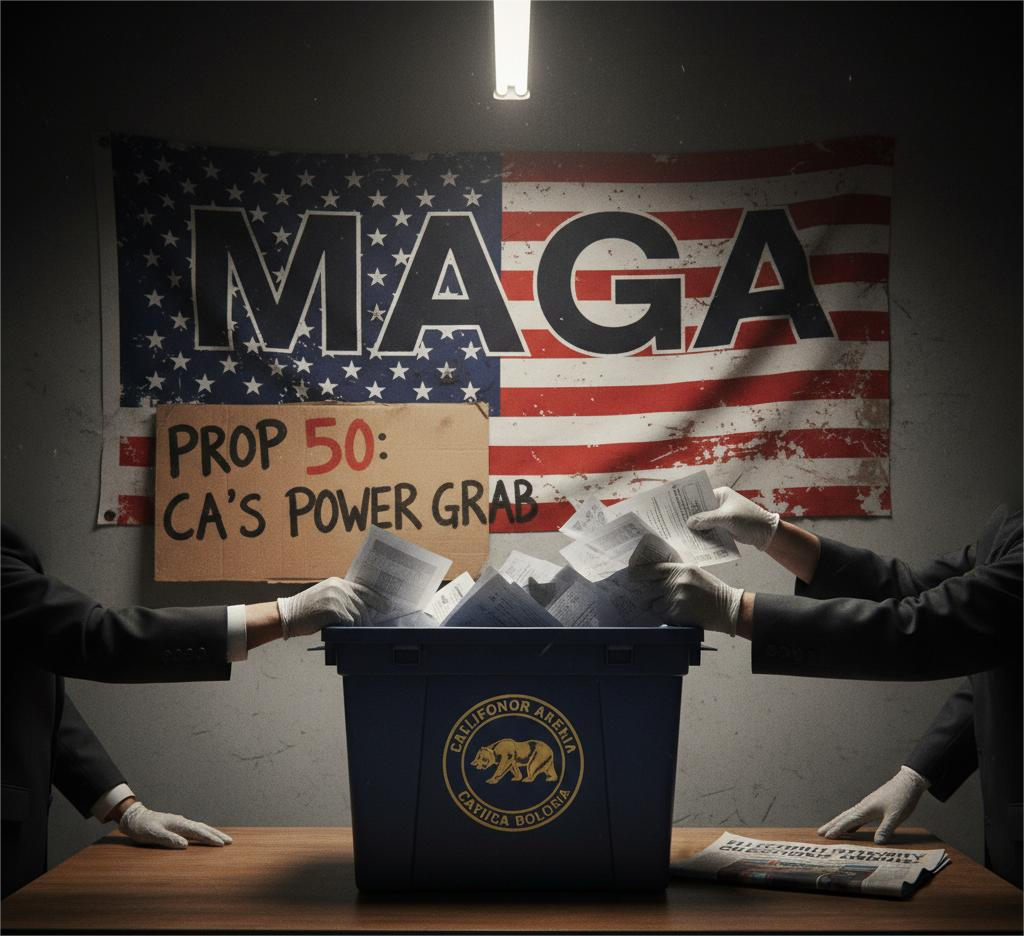
California’s Prop 50 is the latest political circus calling itself “democracy.” Supposedly, it fixes “election rigging,” but what it really does is hand the state legislature—run by Democrats—the power to redraw congressional maps through 2030.
Prop 50 would temporarily kill California’s independent redistricting commission and let politicians pick their voters instead of the other way around.
The “Yes on 50” crowd, backed by Governor Gavin Newsom and left-wing groups, claims it’s about fairness. But come on—if fairness meant giving politicians more power, DC would be paradise by now. Polls released during the writing of this article indicate overwhelmingly Prop 50 will pass.
The “No on Prop 50” side, including MAGA conservatives and the California Republican Party, sees it for what it is: a power grab that could lock in Democrat control and crush any hope of balance. Polls are heating up and this fight is getting nasty.
If you think California politics can’t get more chaotic, buckle up. This one could change how elections work for years—and not in a good way.
The Juicy Bits and Key Takeaways 💦
- Prop 50 lets California lawmakers draw their own congressional maps.
- Supporters say it protects democracy, critics call it a partisan takeover.
- The outcome could reshape power in California and beyond.
Prop 50: The Basics They Don’t Want You to Know
California’s Proposition 50 sounds like another snooze-fest ballot measure, but it’s actually a political power grab dressed up as “democracy reform.” It’s all about who gets to draw the lines that decide elections—and spoiler alert—it’s not you.
This whole thing reeks of insider politics, not public service.

What Is California Prop 50?
Prop 50, also called the Election Rigging Response Act, would let the California Legislature—yeah, the same crew already running Sacramento—take over the job of drawing congressional district maps.
Normally, that job belongs to the California Citizens Redistricting Commission, an independent group created to stop politicians from picking their voters. But Prop 50 boots them out until after the 2030 Census.
If voters say yes, lawmakers start drawing new maps in 2026 and those maps stick until 2030. If voters say no, the independent commission keeps control.
Supporters claim this is an “emergency fix” to stop supposed election interference. Opponents, including lots of conservatives and California Republicans, call it what it is: a blatant power grab to lock in Democrat control of Congress.
How Did Prop 50 Even Happen?
This circus started after Gov. Gavin Newsom and his allies freaked out over redistricting moves in Texas and other red states. They accused Donald Trump and Republicans of trying to “rig” future elections.
So instead of trusting California’s own independent system, they decided to rewrite the state constitution to give themselves more control. Because nothing says “protect democracy” like letting politicians draw their own maps, right?
The measure got fast-tracked into a 2025 special election, one of the most expensive ballot fights in state history. Polls show voters split almost 50/50, with Yes on 50 ads flooding social media and No on 50 campaigns warning California’s already broken system will only get worse.
Election Rigging Response Act: What’s the Real Story?
The name alone—Election Rigging Response Act—sounds like something out of a bad political thriller. It’s marketed as a defense against Trump, but it’s really about Democrats keeping power in California’s congressional seats.
Let’s call it what it is: redistricting revenge. Instead of trusting fair maps, they want to draw their own and claim it’s for “democracy.”
Here’s the breakdown:
| Side | What They Say | What It Means |
|---|---|---|
| Yes on 50 | “Protect democracy from Trump.” | Let politicians control district lines. |
| No on 50 | “Keep the independent commission.” | Keep voters, not lawmakers, in charge. |
If Prop 50 passes, California’s political map becomes a Democrat-controlled playground until 2030. Either way, I’m stocking up on popcorn—it’s going to be a wild election night.
Yes on Prop 50: Who’s Pushing This and Why?
Prop 50 isn’t just some random ballot measure—it’s a full-blown political stunt dressed up as “democracy reform.” The same California elites who run Hollywood, the teachers’ unions, and the Democratic Party machine are all in on it.
They say it’s about fairness, but it looks like a power grab to lock in blue seats through 2030.
Democrats and Their Hollywood-Style Endorsements
You can’t swing a surfboard in Malibu without hitting a celebrity who’s shouting “Vote Yes on 50!” from their Tesla. Gov. Gavin Newsom is the star of this show, selling Prop 50 like it’s the sequel to “Saving Democracy.”
He’s got Barack Obama, Nancy Pelosi, and Adam Schiff backing him up—basically the Avengers of California liberal politics. It’s the same playbook every time: roll out polished speeches, emotional ads, and hashtags about “protecting democracy.”
Meanwhile, the real goal is to redraw congressional maps in a way that keeps Democrats running the show. They’re calling it the Election Rigging Response Act—which is wild, because it’s literally about rigging elections.
Even Alex Padilla and other party insiders are pushing it like it’s a moral crusade. But let’s be real—this isn’t about morals. It’s about math. More blue districts mean more power in D.C., and that’s what this whole production is about.
Labor Unions and Progressive Groups: Follow the Money
Whenever you want to know what’s really going on in California politics, just follow the money. The California Teachers Association, Planned Parenthood Action Fund, and a bunch of progressive PACs are throwing cash at the Yes on Prop 50 campaign like it’s a Vegas slot machine.
These groups see Prop 50 as an investment. More Democratic seats mean more friendly legislation, more funding, and fewer questions about how taxpayer money gets spent.
Courage California, one of the loudest progressive groups, is running digital campaigns that make it sound like Prop 50 will save the planet. Spoiler: it won’t.
Here’s the short version:
| Group | Why They Care |
|---|---|
| Teachers’ Unions | Want to keep Democrats in charge of education funding |
| Planned Parenthood | Wants continued state support for abortion access |
| Progressive PACs | Want long-term political dominance |
It’s not charity—it’s strategy.
Prop 50: How the California Democratic Party Spins It
The California Democratic Party is running full PR mode on this thing. They’re calling Prop 50 a “defense of democracy,” but it’s really a defense of their turf.
Their messaging is slick—lots of talk about fairness, equality, and “standing up to Trump.” They’ve even branded it as a way to “counter Texas,” because apparently every political move now needs a villain.
They’re framing conservatives and MAGA voters as the bad guys trying to “undermine democracy,” while quietly redrawing the map to make sure no Republican can win a seat. It’s classic California politics—flashy, emotional, and just a little bit shady.
They’re betting most voters won’t read the fine print. But I did, and it screams power grab louder than a Pelosi fundraiser.
No on Prop 50: The MAGA Rebellion
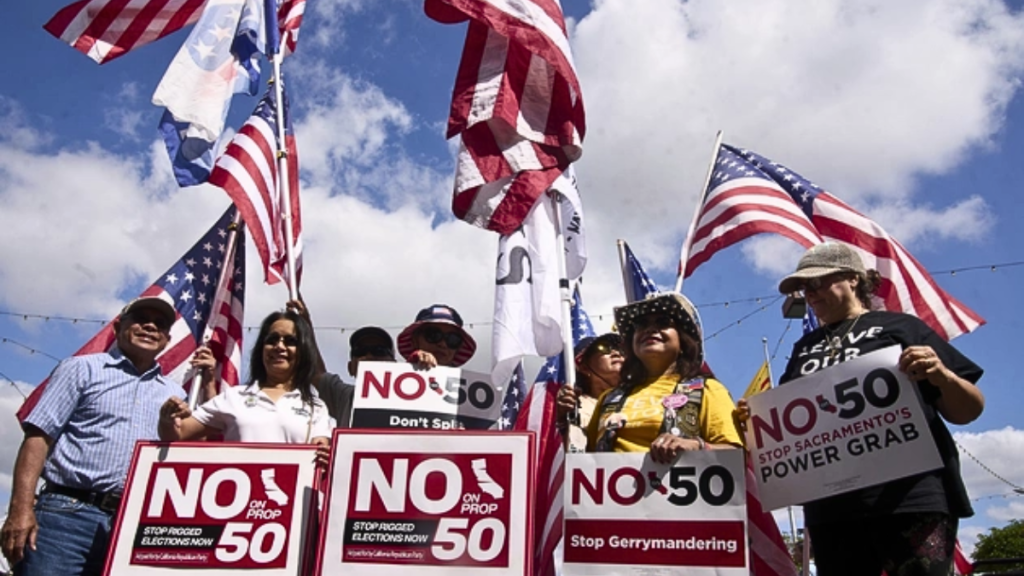
Prop 50 isn’t just another California ballot measure—it’s a political street fight. Democrats want to redraw congressional maps to lock in blue seats, and conservatives see it as a full-blown power grab.
The pushback has turned into a rallying cry for MAGA voters, Republican leaders, and anti-establishment figures who are done playing nice.
California Republican Party: Last Stand
The California Republican Party is treating Prop 50 like it’s the Alamo. They know if this “temporary” redistricting passes, Democrats could control congressional maps until 2030.
That’s not temporary—that’s political colonization. Party leaders argue that Gov. Gavin Newsom and Sacramento insiders are trying to erase the state’s independent redistricting commission, which voters created to stop exactly this kind of stunt.
It’s not about fairness; it’s about keeping power. At rallies and fundraisers, I’ve seen the GOP base fired up in a way I haven’t since the 2016 Trump campaign.
They’re tired of one-party rule, tired of being told their votes don’t matter, and ready to make noise. The slogan floating around? “No on 50—Yes on Freedom.”
Charles Munger, Carl DeMaio, and the Anti-Establishment Crew
When Charles Munger Jr. and Carl DeMaio get involved, you know it’s war. Munger’s money and DeMaio’s microphone have turned No on Prop 50 into a statewide resistance tour.
They’re calling out what they see as a “fraudulent scheme” to trick voters with feel-good language while gutting election integrity. DeMaio, who leads Reform California, doesn’t mince words. He calls Prop 50 “Newsom’s election-rigging plan,” and honestly, it’s hard to argue.
Munger’s funding ads, DeMaio’s hitting talk radio, and MAGA influencers are pushing the message online. It’s a weird but effective mix of old-school conservatives and new-school populists.
They’re not just opposing Prop 50—they’re trying to prove that conservative activism in California isn’t dead.
How California Will Be Ruined by Yes on Prop 50
If Prop 50 passes, California’s independent redistricting is toast. Lawmakers—not regular folks—get to decide who represents you. That’s basically like letting students grade their own finals. What could go wrong?
Get ready for millions in taxpayer money to vanish in legal brawls. More partisan gridlock, fewer competitive races—you know, all the stuff nobody asked for.
The state’s already bleeding residents and businesses. Prop 50 just throws gas on that fire.
And here’s the kicker: it sets a national precedent. If California, the so-called “model of democracy,” can nuke fair maps for political payback, why wouldn’t Texas Republicans or anyone else follow suit?
Redistricting Drama on Prop 50: Maps, Gerrymandering, and Power Plays
California politics is back at it with reality-show drama. The state’s power players are brawling over who gets to draw the congressional maps, who gets axed, and who scores the cushy seat in D.C.
It’s all about control, not fairness. Prop 50 is just the latest episode in this never-ending political soap opera.
Independent Redistricting vs. Partisan Shenanigans
Let’s be honest—independent redistricting was supposed to kill the backroom deals. The California Citizens Redistricting Commission got created so politicians couldn’t carve up the state like a Thanksgiving turkey.
It actually worked for a while. But now, the political elite want their knives back.
Prop 50 plans to toss that independence straight out the window. The pitch? Let Democrats redraw congressional districts mid-decade to “fight fire with fire” after Texas Republicans did their own partisan shuffle.
Sounds noble, right? Until you realize it’s just another gerrymander—this time painted blue instead of red.
Here’s the quick breakdown:
| Party | Goal | Method |
|---|---|---|
| Democrats | Gain 5+ seats | Redraw maps mid-cycle |
| Republicans | Hold ground | Call out hypocrisy |
If this thing passes, every red voter in California might as well grab popcorn and watch their voice fade into background noise.
Congressional District Boundaries and the 2030 U.S. Census
The 2030 U.S. Census decides how many seats California keeps—or loses—in Congress. Every line drawn today shapes who represents millions tomorrow.
Mess with the district boundaries now, and you’re basically pre-rigging the next decade of elections.
Democrats claim they’re “protecting representation.” Yeah, and I’m “dieting” when I order extra fries. They’re just locking in power before the census even hits.
The new maps under Prop 50 would last through three election cycles. Once those lines are set, fairness takes a hike. The state’s diversity and competitiveness get shoved aside for party math and donor satisfaction.
California Citizens Redistricting Commission: Benched or Broken?
I actually liked the California Citizens Redistricting Commission. It was one of the few things Sacramento didn’t totally screw up.
Regular people—Democrats, Republicans, independents—sat down, listened to the public, and drew maps in the open. That’s rare honesty in politics.
But Prop 50 treats the commission like some outdated gadget. The governor and his crew want to bench it for a “temporary” fix that magically lasts three elections. Temporary, my ass. That’s like calling a tattoo temporary because you can laser it off—after paying thousands.
If voters say yes, California’s gold standard of independent redistricting becomes a cautionary tale. The message to other states? “Fair maps are fine—until they stop helping our side.” That’s not democracy. That’s a straight-up power grab dressed up as reform.
Prop 50 Polls and Public Opinion: Who’s Winning the Hype War?
California’s Prop 50 fight is a circus of polls, spin, and political cosplay. Numbers look one way on Monday and flip by Friday.
Everyone—from the governor’s PR squad to MAGA Twitter—is claiming victory before the ballots even drop.
Polling Numbers: Real Support or Media Mirage?
Prop 50 polls are about as reliable as a Hollywood marriage. Emerson College says 51% of California voters are on board one week.
Next week, Harper Polling shows support slipping once voters hear about the legislature drawing its own maps. People like the idea until they realize who’s holding the crayons.
Media outlets keep hyping that “majority support” line, but if you dig deeper, it’s shaky. About 15% of voters admit they’re confused by the ballot language. That’s not enthusiasm—that’s chaos.
When pollsters mention corruption or politicians picking their own districts, support nosedives to around 45%. So yeah, the hype looks like smoke and mirrors.
| Poll Source | Yes | No | Undecided |
|---|---|---|---|
| Emerson College | 51% | 34% | 15% |
| Harper Polling | 54% | 29% | 17% |
| After corruption framing | 45% | 40% | 15% |
Grassroots vs. Big Money: Who’s Really Moving the Needle?
The “Yes on 50” campaign is swimming in big donor cash and Sacramento insiders. It’s the usual cocktail of consultants, tech billionaires, and union bosses who treat California like their private playground.
They’re dropping money faster than an OnlyFans model during rent week. Meanwhile, the “No on 50” side is scrappy and loud.
Local conservatives, MAGA groups, and independent watchdogs are hammering the message that Prop 50 = power grab. They’re not slick, but they’re real—and voters can smell authenticity.
Grassroots volunteers are flooding social media, town halls, and even barbershops with memes and flyers. It’s old-school hustle versus establishment gloss.
If the polls tighten, it won’t be because of TV ads—it’ll be because regular people finally woke up and said, “Wait, why are politicians redrawing their own maps again?”
How Prop 50 Could Blow Up California’s Elections
Prop 50 might sound like some snooze of a ballot measure, but it’s a political grenade. It would swap out California’s independent redistricting maps for ones drawn by politicians—right before the 2026 U.S. House elections.
That means new district lines, new confusion, and a whole lot of chaos for voters already drowning in mail-in ballots and drop boxes.
Voter’s Choice Act and Vote-By-Mail: Chaos Incoming?
I’ve seen California’s Voter’s Choice Act up close—it’s already a circus. Everyone gets a mail ballot, everyone can vote anywhere, and everyone’s confused.
Now toss in Prop 50’s new congressional maps, and voters won’t even know which district they’re in. Picture this: your ballot says “District 12,” but you used to be in “District 8.”
You’ll wonder if your vote even counts. County officials will scramble to reprint materials, update databases, and explain the mess on TikTok.
Potential issues:
| Problem | Why It Matters |
|---|---|
| Misaddressed ballots | Wrong districts = invalid votes |
| Outdated voter guides | New maps, old info |
| Election worker burnout | Constant retraining |
That’s not “voter access.” That’s bureaucratic chaos.
Ballot Drop-Off Locations: More Confusion?
Let’s talk ballot drop-off spots—California’s favorite election prop. With Prop 50’s redrawn lines, thousands of voters could find their usual drop box suddenly “out of district.”
Imagine driving to your old church drop box only to be told your ballot’s invalid because your new district’s 10 miles away. Election officials will have to move or relabel boxes across counties.
That’s a logistical nightmare. And who do you think will take the blame when ballots vanish or get rejected?
Not the politicians who drew the maps. My take: this isn’t voter empowerment—it’s voter whiplash. Even honest voters will start thinking the system’s rigged.
What Happens After the 2030 Census?
Prop 50 swears it’s temporary—supposedly, the independent Citizens Redistricting Commission returns after the 2030 Census. Yeah, okay. When has government ever just handed power back after snatching it?
If the Legislature gets comfy drawing its own U.S. House maps, don’t hold your breath waiting for them to hand the crayons back. The 2030 redistricting could turn into another messy partisan brawl.
Democrats will probably keep their advantage, and Republicans might end up on the sidelines for another decade. Wouldn’t shock anyone. Especially with the corrupt leadership, dark money, and anti-American agenda on tap in the big blue state. Until next time, stay classy VICESNOB.
Frequently Asked Questions
Backers of Prop 50 include:
i. Governor Gavin Newsom
ii. California Democratic Party
iii. Labor unions (e.g., California Teachers Association)
iv. Progressive groups like Planned Parenthood Action Fund and Courage California
v. National Democrats including Barack Obama, Nancy Pelosi, and Adam Schiff
They claim it’s a necessary response to redistricting moves in red states like Texas and a way to “protect democracy.”
i. Strips power from the independent redistricting commission through 2030.
ii. Gives California lawmakers the authority to redraw congressional maps starting in 2026.
iii. Alters the state constitution to enable this “temporary” shift in redistricting control.
The maps drawn under Prop 50 would affect three election cycles: 2026, 2028, and 2030.
You can vote Yes or No on Prop 50 during the 2025 California special election.
i. A “Yes” vote gives redistricting power to the legislature through 2030.
ii. A “No” vote keeps the California Citizens Redistricting Commission in charge.
Ballots will be mailed to all registered voters. You can vote by mail, drop box, or in person depending on your county.
Prop 50, officially titled the Election Rigging Response Act, is a controversial ballot measure in California. It temporarily suspends the state’s independent Citizens Redistricting Commission and allows the California State Legislature (currently Democrat-controlled) to draw congressional district maps from 2026 until after the 2030 Census.