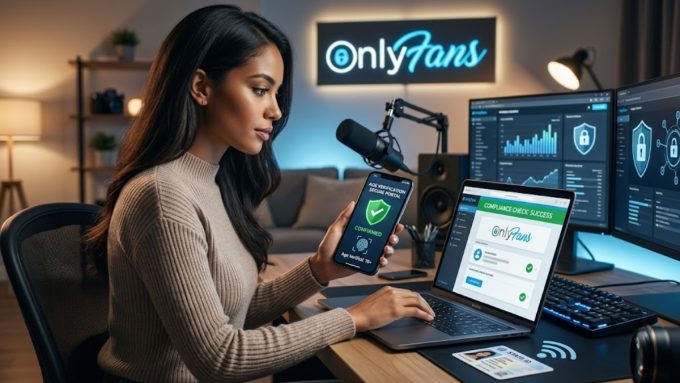














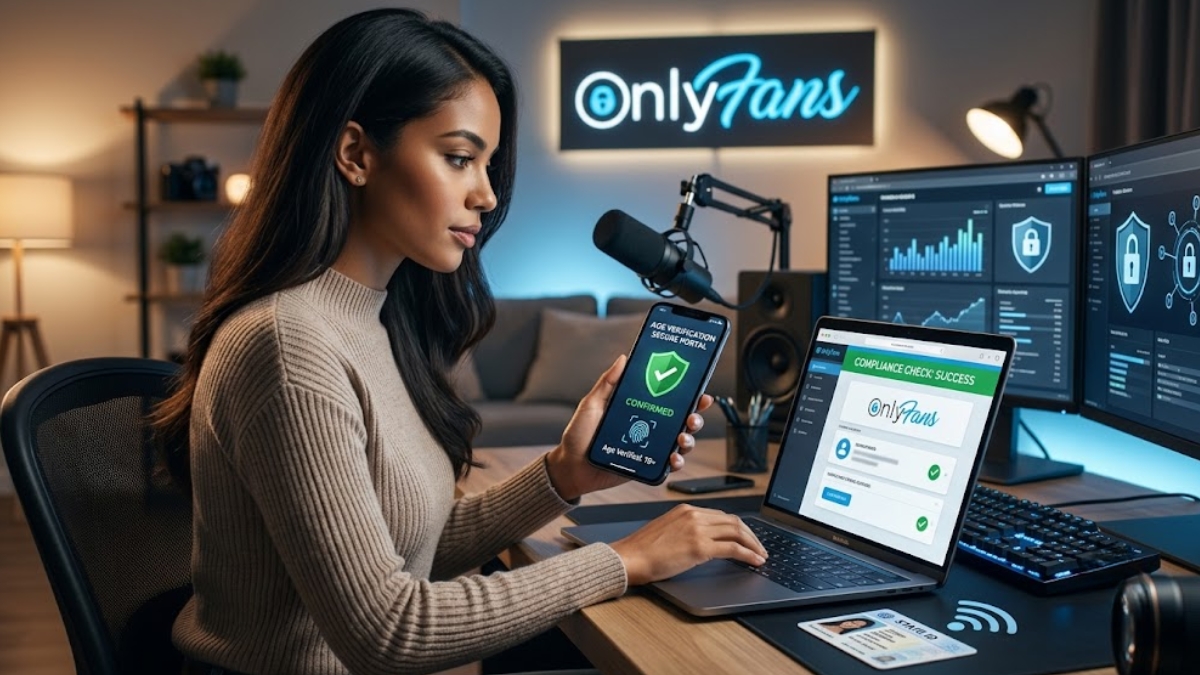
Age verification laws are fundamentally changing how OnlyFans, Fansly, and every major adult platform operates in 2026. On July 6, 2026, the U.S. Supreme Court declined to block Texas’s App Store Accountability Act — a ruling that extends age-assurance requirements beyond adult websites to every app distributed through Apple and Google’s app stores.
Combined with 25 U.S. states now enforcing age verification laws and the UK’s Online Safety Act provisions going live, the compliance landscape for adult creators has shifted more in 12 months than in the previous decade.
Key Takeaways
- The U.S. Supreme Court declined to block Texas’s App Store Accountability Act on July 6, 2026, leaving the law enforceable while constitutional challenges continue (Source: Silverstein Legal, July 2026)
- 25 U.S. states now enforce age verification laws for adult content platforms, up from 8 states in 2023 (Source: Free Speech Coalition FAQ, July 2026)
- Australia’s eSafety Phase 2 went live in March 2026, requiring adult sites to verify visitor ages via photo ID, facial age scan, or digital identity wallet (Source: ScamAdviser platform safety review, 2026)
- OnlyFans now requires creator re-verification every 12 months as part of strengthened compliance protocols (Source: ScamAdviser, 2026)
- The Texas law is broader than adult-specific legislation — it applies at the app-store level and affects subscriptions, tipping, paid messaging, and in-app purchases across all apps, not just explicit content platforms
What Did the Supreme Court Actually Rule on Texas Age Verification?
The Supreme Court did not rule on whether the Texas law is constitutional. It declined emergency relief, meaning the law stays enforceable while the legal challenge continues in lower courts. This distinction matters because it creates immediate compliance obligations without a final legal resolution.
The Texas App Store Accountability Act requires covered app stores to:
- Verify the age category of Texas users when they create an account
- Link parental accounts for users under 18
- Obtain parental consent for app downloads and in-app purchases by minors
- Disclose age ratings, data collection practices, and privacy safeguards to parents
- Transmit age-category and consent information to developers
Apple has already announced Texas-specific implementation steps, including age assurance requirements for new Apple Accounts in Texas and developer access to age category data through Apple’s Declared Age Range API.
For adult platform creators, this means app-based access to OnlyFans, Fansly, and similar platforms faces new friction in Texas — and the framework is designed to expand nationally.
The OnlyFans platform overview we published earlier this year covers the platform’s existing verification requirements in detail.
How Many States Now Require Age Verification for Adult Content?
Twenty-five U.S. states now enforce some form of age verification for adult content access, according to the Free Speech Coalition’s compliance tracker (updated July 2026). That’s a 212% increase from eight states in 2023.
The enforcement map includes:
Research from the Phoenix Center found that when compliant platforms block access in age-verification states, users don’t stop seeking adult content — they migrate to non-compliant sites with fewer safety protections (Source: ScamAdviser platform review, 2026). This creates a paradox where the laws intended to protect minors may push consumers toward riskier platforms.
Florida’s proposed 50% “sin tax” on adult platform earnings adds another compliance layer — one that creators like Gabby Epstein and Sophie Rain have publicly opposed.
What Does This Mean for OnlyFans Creators Specifically?
OnlyFans creators face both direct and indirect impacts from the expanding verification framework.
Direct compliance changes already in effect:
- Creator re-verification is now mandatory every 12 months — up from a one-time process previously
- Age verification for subscribers is expanding under national law in multiple jurisdictions
- Content moderation requirements have tightened, with platforms expected to prove their compliance controls work (Source: Silverstein Legal, July 2026)
Indirect business impacts:
- Subscriber friction increases in verification-required states, potentially reducing sign-up conversion rates
- Payment processing requirements are tightening, with Mastercard’s AN 5196 rules requiring performer identity verification and age documentation (Source: Mobiuspay compliance guide, 2026)
- App store distribution faces new parental-consent workflows that add steps before users can access adult-adjacent features
The top OnlyFans creators earning seven and eight figures are largely insulated from subscriber-count dips. Mid-tier and emerging creators — the ones building audiences in specific states — face the steepest headwinds.
Creators considering whether OnlyFans is worth it in this regulatory environment need to factor compliance costs and potential subscriber friction into their business models.
How Are International Markets Responding?
The age verification movement isn’t just American. Global adult platforms now navigate a patchwork of national requirements.
- United Kingdom: The Online Safety Act’s adult content provisions went fully live in July 2025, requiring robust age verification for all sites hosting pornographic content. Ofcom can fine non-compliant platforms up to £18 million or 10% of global revenue (Source: Baker Donelson legal analysis, 2026).
- Australia: eSafety Phase 2 rolled out in March 2026, requiring adult content websites to verify visitor ages via photo ID, facial age scan, credit card check, parental consent, or digital identity wallet. Australia’s eSafety Commissioner has also taken enforcement action against AI “nudify” services (Source: Silverstein Legal, May 2026).
- European Union: The EU’s approach favors privacy-preserving age verification patterns — biometric age estimation and tokenized digital identity systems that verify age without storing personally identifiable information (Source: Segpay compliance guide, 2026). An academic study of 154 European adult sites found significant gaps between legal requirements and actual platform implementation (Source: arXiv research paper, June 2026).
For context on how these regulations affect OnlyFans models arrested in Turkey and other international enforcement actions, the regulatory trend is clear: every major market is tightening access controls.
ViceSnob’s Take
We’ve watched age verification evolve from a political talking point to an operational reality that touches every creator’s bottom line. The Texas Supreme Court decision is significant not because it settles the constitutional question — it doesn’t — but because it signals that app-store-level enforcement is coming nationwide. When Apple and Google build compliance infrastructure for one state, they don’t un-build it for the rest.
The uncomfortable truth nobody in the creator economy wants to say out loud: age verification laws will consolidate market share among the largest platforms. OnlyFans, with $6.6 billion in annual transactions and the resources to build compliance teams, will adapt. The mid-tier platforms — Fansly, JustForFans, smaller creator sites — face compliance costs that eat into already-thin margins.
For creators, the practical takeaway is straightforward. Your platform’s compliance infrastructure is now a business consideration on par with commission rates and payment processing. The era where you could ignore regulatory frameworks and just post content is ending. We don’t love it, but we’d rather you hear it from us than learn it from a suspended account.
Frequently Asked Questions
Yes. OnlyFans requires government-issued ID verification for all creators globally, and re-verification is now mandatory every 12 months as of 2026. For subscribers, age verification requirements vary by jurisdiction — 25 U.S. states, the UK, and Australia currently enforce some form of viewer age verification for adult content access.
As of July 2026, 25 U.S. states enforce age verification laws for adult content platforms, including Texas, Louisiana, Virginia, Utah, Mississippi, Arkansas, Montana, North Carolina, Indiana, Florida, Tennessee, Kentucky, Oklahoma, Idaho, Nebraska, and Kansas, with six additional states pending enforcement. Texas expanded requirements beyond adult sites to all app store distributions through the App Store Accountability Act.
The earnings impact depends on audience geography. Creators with subscriber bases concentrated in states with strict age verification may see reduced sign-up conversion rates due to additional friction. Top-earning creators with diversified, global audiences report minimal impact. Mid-tier creators building audiences in verification-heavy states face the steepest potential headwinds, as subscriber acquisition costs effectively increase (Source: Scrile monetization trends analysis, July 2026).












Leave a comment