






















California just pulled another political stunt, and honestly, I’m not even shocked anymore. Proposition 50—the so-called “redistricting reform”—passed, handing Gavin Newsom and his sugar daddies a brand new power map. Prop 50 has certainly stirred up plenty of controversy.
Prop 50 passed in California, giving Newsom and his backers, including a fat $10 million check from George Soros, the green light to redraw congressional districts in their favor. You don’t have to be some Fox News junkie to see what’s happening here—it’s the same old rigged game, just with a fresh coat of “fairness” paint.
I watched the results come in like a rerun of a bad sitcom. The campaign raised about $70 million, and—big surprise—Soros’s cash led the charge. They tried to sell it as a way to “balance” Texas’s gerrymandering, but let’s be real—this was about locking down blue seats before the 2026 midterms.
California’s elections have become a high-stakes poker game, and the house always wins. If you think this is just a California problem, you’re missing the bigger play.
What happens here sets the tone for the rest of the country. The “fix” isn’t just local—it’s spreading faster than OnlyFans leaks on Twitter.
The Key Takeaways
- Prop 50 passed, giving Newsom control over California’s redistricting.
- Soros’ $10 million donation made him the biggest funder of the campaign.
- The move could shape national politics heading into the 2026 midterms.
Prop 50: The Wildest Ballot Measure in California History
California just pulled off one of the most expensive and politically charged redistricting stunts ever. Prop 50 passed, giving Democrats power to redraw congressional maps mid-decade—and trust me, that’s not normal.
The money trail, the timing, and the big-name donors all scream political theater wrapped in Silicon Valley cash.
What Is Proposition 50 and Why Should You Care?
Prop 50 might sound like Ambien until you realize it changes who controls Congress seats. It lets California’s Democrat-run government redraw district lines again, even though the maps were already set after the 2020 Census.
It’s like changing the rules halfway through the game because your team’s losing. Voters approved it in a special election after Gov. Gavin Newsom went full-court press for it.
He called it a “fairness” move, but come on—it’s about stacking the deck for Democrats in 2026. The campaign torched over $140 million, making it one of California’s priciest ballot fights ever.
Supporters claimed it would “protect democracy.” Opponents called it “a power grab with a smiley face.” Either way, it permanently rewires how elections work in the bluest state in America.
How Prop 50 Hijacks California’s Redistricting
California used to brag about its “independent” redistricting commission. That’s toast now.
Prop 50 hands the map-making pen back to politicians—mostly Democrats. The new lines tilt several districts left, putting at least five Republican-held seats on the chopping block.
Here’s the quick and dirty:
- Before Prop 50: Citizen commission drew the lines.
- After Prop 50: Lawmakers loyal to Newsom draw the lines.
- Winners: Democrats.
- Losers: GOP incumbents and anyone who actually liked fair maps.
Critics say this is textbook gerrymandering. Supporters call it “course correction.” I call it what it is—political engineering dressed up as reform.
It’s like watching the dealer reshuffle mid-hand… and somehow always dealing aces to the same side. How convenient, right?
Who’s Really Behind Prop 50? Follow the Money
When I see a $120 million campaign, my first question is: who’s paying for this circus? The usual suspects show up—Hollywood donors, Silicon Valley billionaires, and groups linked to George Soros and the Open Society Foundations.
Newsom’s PAC vacuumed up massive checks from progressive mega-donors who bankroll similar “voting reform” scams nationwide. It’s not a conspiracy; it’s just politics at billionaire scale.
Follow the cash and you’ll find it snaking through layers of nonprofits and committees before exploding into TV ads and mailbox spam. Meanwhile, regular Californians are left wondering why their vote feels like a bad reality show audition.
If democracy’s for sale, Prop 50 just set a new record price tag. Welcome to the big leagues, baby.
Prop 50 Power Grab: Gavin Newsom & Soros Under Fire
California politics just went full Hollywood again. Gov. Gavin Newsom pulled off another high-dollar stunt with the help of billionaire George Soros and his deep-pocketed crew.
The result? Proposition 50—a redistricting plan that tilts the state’s congressional map blue and flexes the muscle of elite donors over everyday voters. If you’re not pissed, you’re not paying attention.
Newsom’s $70 Million War Chest: Soros Bucks & Union Cash
You know it’s serious when a governor’s campaign looks more like a Marvel movie budget. Newsom’s team raked in about $70 million to push Proposition 50.
$10 million came straight from George Soros, the Democratic financier who’s never seen a left-wing cause he didn’t want to bankroll. Add in the usual suspects—public sector unions, Hollywood donors, and Silicon Valley execs—and you’ve got a political money pit that could drown out any opposition.
I’m all for competition, but this looks more like a monopoly on influence. Even Newsom himself reportedly told donors to “stop giving.” That’s like a bartender cutting you off after your twelfth shot—too late, buddy, you’re already face-down on the bar.
How the Soros Family Became California’s Puppet Masters
The Soros family doesn’t just toss cash around for fun. Through groups tied to Open Society Foundations, they’ve built a political machine that shapes everything from district maps to prosecutor races.
In California, their $10 million donation made them the largest single funders of the redistricting push. That kind of money doesn’t just buy ads—it buys access.
When Soros-backed groups fund your campaign, you’re not exactly hitting “ignore” on their calls. It’s like having your landlord also be your roommate—you’re never really in charge, are you?
Here’s the kicker: Soros’s influence stretches way beyond California. His network quietly backs “reform” candidates and ballot measures nationwide, always under the banner of “democracy.” Funny how democracy always seems to mean more power for them. Coincidence? I doubt it.
Prop 50 Clash: Newsom vs. Trump in Power Showdown
Let’s get real—Proposition 50 wasn’t about “fairness.” It was about Donald Trump. Newsom pitched it as a moral crusade to stop Trump’s supposed “gerrymandering,” but the plan conveniently helps Democrats lock down more House seats heading into 2026.
Polls showed most Californians didn’t even understand the measure, yet it passed after a flood of pro-Newsom ads featuring Obama and Elizabeth Warren. That’s not grassroots—it’s AstroTurf, and it smells like it.
The move cements Newsom’s national ambitions. He’s already teasing a 2028 presidential run, and this power grab gives him the narrative he needs: “I saved democracy.” Give me a break.
When billionaires and governors redraw the map to keep themselves in power, democracy’s the last thing being saved. It’s like watching a bank robber call himself a security guard.
Election Results, Polls, and the Redistricting Circus
California’s Prop 50 vote turned into a full-blown circus. The state’s redistricting measure didn’t just tweak lines on a map—it flipped the script on who holds power in Congress and showed just how far Gov. Gavin Newsom will go to stack the deck for his party.
Did Prop 50 Pass? Breaking Down the Results
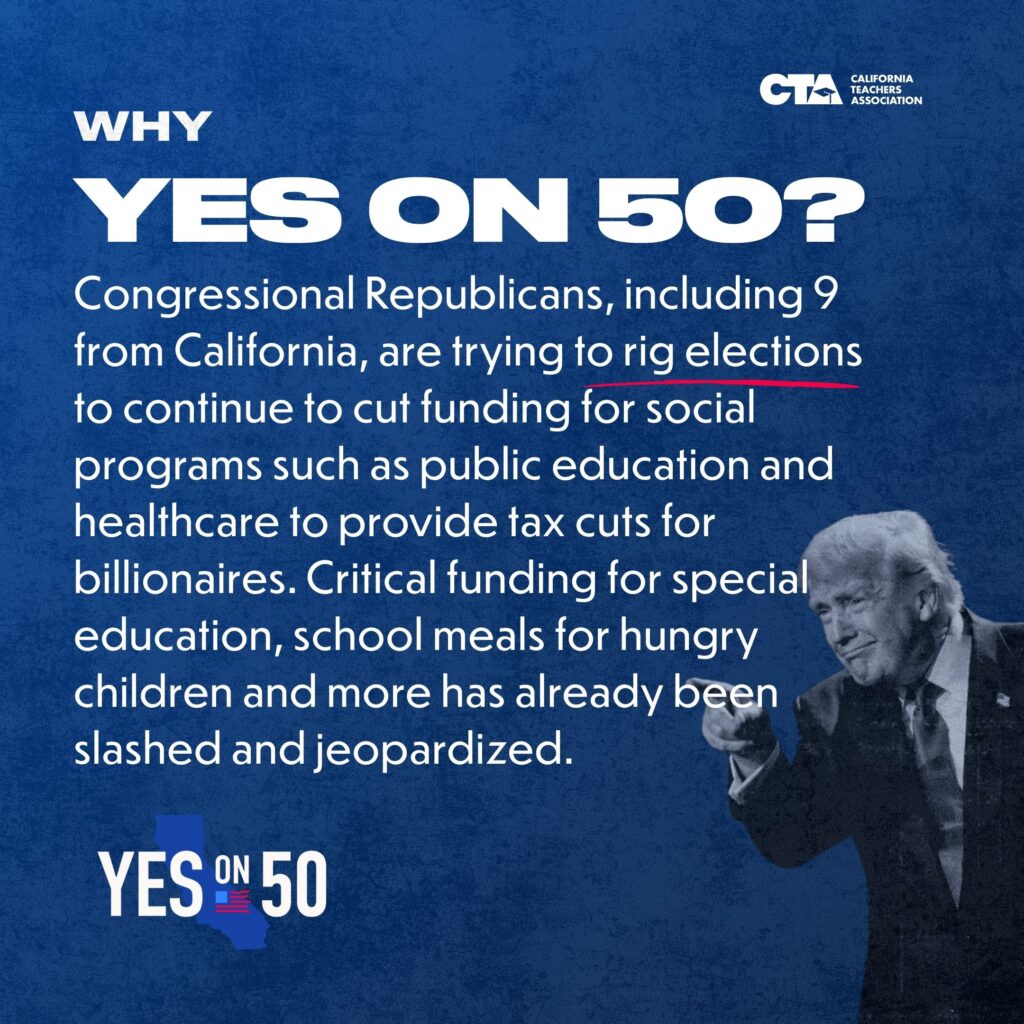
Yeah, Prop 50 passed—barely, but enough for Democrats to pop champagne. The measure gives Newsom and his crew the green light to redraw California’s congressional districts mid-decade. That’s a big deal because it overrides the so-called “independent” redistricting commission until after 2030.
Election Night Snapshot:
| Category | Result |
|---|---|
| Yes on Prop 50 | ~52% |
| No on Prop 50 | ~48% |
| Turnout | Around 60% of registered voters |
Five Republican districts are now basically toast. The new maps pack in more Democratic voters, making it almost impossible for GOP candidates to survive.
It’s like watching someone change the rules of the game halfway through—and then acting like it’s “fair.” Sure, and Hunter Biden’s laptop was just a “Russian hoax,” right?
Prop 50 Results: How Californians Really Voted
Polls leading up to Election Day showed a tight race, with independents holding all the cards. Democrats pushed hard with ads about “representation” and “equity,” while Republicans warned about one-party control.
Turnout was wild in urban counties—Los Angeles, San Francisco, and Alameda—where blue votes stacked up like weed gummies at Coachella. Rural areas and the Central Valley leaned red but just couldn’t close the gap.
Most voters I talked to had no clue what Prop 50 actually did. The ballot language sounded harmless, but the fine print handed more power to Sacramento elites. Classic California politics: confuse the voters, then call it democracy. It’s like a magic trick, but your wallet disappears.
Gerrymandering, Republican Districts, and the Fallout
Prop 50’s passage means California just joined the mid-decade redistricting club—usually reserved for red states like Texas. The twist? Democrats did it this time, and the media suddenly called it “reform.” Hilarious, right?
Republican lawmakers are furious. They say the new map could cost them up to five House seats in 2026. That’s not chump change—it could flip the entire U.S. House.
The fallout’s already gone national. Red states are doubling down on their own maps, and lawsuits are flying faster than campaign ads. I’ll say it straight: this isn’t about fairness. It’s about power, and California just reminded everyone who’s running the show.
National Shockwaves: Texas, Trump, and the 2026 Midterms
The next big political brawl is already heating up. Texas is flexing red-state muscle, Trump’s back in the ring, and Democrats like Newsom are scrambling to keep control of their blue fortresses.

What’s happening now could decide who runs Congress after the 2026 midterms—and maybe who runs the whole damn country. Buckle up, America. The circus is just getting started.
Texas Throws Down: Abbott, GOP, and the Red State Playbook
Texas isn’t just holding the line—it’s building a freakin’ wall around it. Governor Greg Abbott and the Texas Legislature are redrawing congressional maps, and honestly, they’re about to lock in GOP power for a decade.
Democrats are screaming “gerrymander” like it’s a new swear word, but Abbott’s just playing the same dirty game they ran in California. Let’s not act shocked.
In Austin, Republicans treat every district like it’s the last beer at a tailgate. They’re cutting backroom deals, carving up boundaries, and making damn sure rural voters don’t get steamrolled by those urban blue mobs.
This is chess, not checkers, and Abbott’s slamming his pieces down like he’s on a Red Bull bender.
Key moves so far:
- New redistricting proposal adds GOP-friendly seats—because why not?
- Election laws tightened on mail-in ballots and ID checks. No more “oops, I lost my ID” excuses.
- Abbott’s base fired up by Trump’s Truth Social rants hyping up Texas. MAGA hats everywhere, folks.
Look, Texas is showing the rest of the red states how to throw elbows and win without begging D.C. for a hall pass. That’s just facts.
Prop 50 Revenge: Newsom Moves to Cancel Texas Wins
Meanwhile, Gavin Newsom is out in California, turning the place into a Democrat fortress with all the subtlety of a sledgehammer. He’s got redistricting, ballot shenanigans, and enough media spin to make you dizzy.
Newsom’s trying to cancel out Texas’s momentum, plain and simple. Political trench warfare, baby—one side tightens elections, the other hands out ballots like candy until “participation” starts looking a whole lot like fraud.
His crew’s working overtime to make sure California ships a full blue clown car to the House of Representatives in 2026. They call it “protecting democracy,” but let’s not kid ourselves—it’s about locking down power.
California’s playbook:
- Mail-in voting made permanent statewide. Because apparently, nobody owns a car in LA.
- Voter roll reviews basically banned to avoid “disenfranchisement.” Translation: Let the dead vote.
- Progressive PACs (Soros bucks, obviously) dumping cash into “voter outreach.” Sure, Jan.
So here we are. Texas builds walls, California builds loopholes. Every damn election cycle. Who’s shocked?
What’s Next for U.S. Elections? The 2026 Showdown
The 2026 midterms are shaping up to be the nastiest political bloodbath since 2020. President Trump is already firing up the MAGA machine, teasing rallies, and dropping not-so-subtle hints on Truth Social about “taking back the House.”
Democrats whine that it’s all fearmongering, but let’s be real—voters are eating it up like free wings at Hooters. If red states like Texas keep their maps and blue states like California keep their machines, we’re all buckled in for a coast-to-coast demolition derby.
The middle of America—Ohio, Arizona, Georgia—will end up playing kingmaker. Who’s gonna walk away with Congress? I’d put my money on the GOP’s ground game, especially with Trump’s comeback tour steamrolling through town.
Buckle up, buttercup. With lawsuits flying, recounts looming, and cable news anchors sweating through their spray tans, the 2026 midterms could make 2020 look like a middle school student council election. Cheers, VICESNOB.
Frequently Asked Questions
Proposition 50 is a 2025 California constitutional amendment that would temporarily suspend the current independent commission’s congressional-district boundaries and allow the state legislature to adopt new maps for the 2026, 2028, and 2030 elections.
A “YES” vote means California would begin using new, legislatively-drawn congressional district maps starting in 2026 instead of sticking with the maps drawn by the independent California Citizens Redistricting Commission until after the 2030 Census.
A “NO” vote means California would continue using the current congressional-district maps drawn by the independent commission until after the next redistricting cycle following the 2030 Census, and the state legislature would not draw interim maps.
The main opposition comes from Republicans and critics who argue that Prop 50 amounts to a partisan power grab by Democrats, undermines the independent commission system, and may lead to gerrymandered maps favoring one party.
Proposition 50 passed by a wide margin in the November 4, 2025 special election, with projections showing around 63-65% of voters in favor.
- 2025 California Proposition 50
- California prop 50
- california prop 50 2025
- California prop 50 polling
- california prop 50 results
- california prop 50 vote
- california prop 50 yes or no
- California Proposition 50
- california proposition 50 polls
- california proposition 50 results
- prop 50 california
- Proposition 50 California
- yes on prop 50 california